Showing posts with label Richard Matheson. Show all posts

Tuesday, 19 August 2014

10 reasons why The Last Man on Earth still thrills 50 years on

The Last Man on Earth (1964)'Another day to live through… Is that all it has been since I inherited the world? Three years? Seems like a hundred million'


While the US got to see The Last Man on Earth first back in 1964, having premiered on 7 May 1964 (as double bill with Circus of Horrors), it wasn't until 19 August that it was released in Italy, where it was filmed, under the title L'ultimo uomo della terra. Folks in the UK, however, had to wait even longer, as the film didn't come out until December 1966. Celebrating its 50th anniversary this year, here’s 10 reasons why one of the most underrated sci-fi’s of the 1960s is worth a revisit.  

1) It was written by the legendary author Richard Matheson The film is based on the American writer’s first novel, I Am Legend, for which he got a $3000 advance from Gold Medal Books. Published in 1954, its paranoid post-apocalyptic scenario struck a chord with a Middle America in the grips of McCarthyism. The first modern vampire novel and this first film version also proved a huge influence on George A Romero’s Night of the Living Dead. It was later filmed as The Omega Man with Charlton Heston in 1971 and as I Am Legend starring Will Smith in 2007.

Last Man on Earth (1964)  

2) It could have been a Hammer film called The Night Creatures Following the success of The Quatermass Experiment (aka The Creeping Unknown) in 1955, Hammer Films paid Matheson $10,000 to adapt his novel for the British studio, with Val Guest lined up to direct. However, the British censors turned the script down fearing it would be too graphic. Hammer, however, kept the title rights and later used it for their 1962 period adventure Captain Clegg.

 Last Man on Earth (1964)  

3) B-movie producer Robert L Lippert brought it to the screen Lippert wanted to film Matheson’s script in 1959 under the title Naked Terror. But ended up securing a co-production deal with Produzioni La Regina in Rome for parent company 20th Century Fox who retitled it The Last Man on Earth. Like Hammer, Lippert ended up using his title for a 1961 documentary about Zulu tribal practices, narrated by… Vincent Price. Matheson, however, was upset by the rewrites and ended up taking his name off the credits and using a psedonym, Swanson. Lippert was also responsible for Hammer's 1954 noir thriller House Across the Lake (check out my review here).


Last Man on Earth (1964)

 4) It gave Vincent Price a long holiday in Rome At the end of his first contract with AIP (which had preventing him from undertaking any other horror roles), Price scored a three-picture back-to-back deal in Italy in 1961. So, while filming the swashbuckling pirate adventure Rage of the Buccaneers and the sword and sandals intrigue Queen of the Nile, he and wife Mary got a long stay in one of their favourite cities ‘digging around’ the ruins and art troves. The Last Man on Earth was filmed in January 1963 (according to Lucy Chase Williams in The Complete Films of Vincent Price).

 Last Man on Earth (1964)  

5) Price gives one of his most underrated performances As the soiled suited 50-year-old scientist Robert Morgan, Price might be light years away from the Matheson’s 30-something everyman factory worker hero (Robert Neville) in the novel, but he lends his shabby sophisticate a subtle sense of restrained dignity that emphasizes Morgan’s displacement in the film’s zombie vampire infested wasteland.

 Last Man on Earth (1964)  

6) It was shot in the dead of winter The film’s eerie post-apocalyptic look was achieved by the film’s cinematographer Franco Delli Colli shooting in the early hours and Vincent Price hated it. ‘I never was so cold in my life as I was in that picture. I had a driver, and I used to tip him a big sum to keep the car running so I could change my clothes in the backseat’, recalled the actor at the 1990 Fangoria Weekend of Horrors.

  Last Man on Earth (1964)  

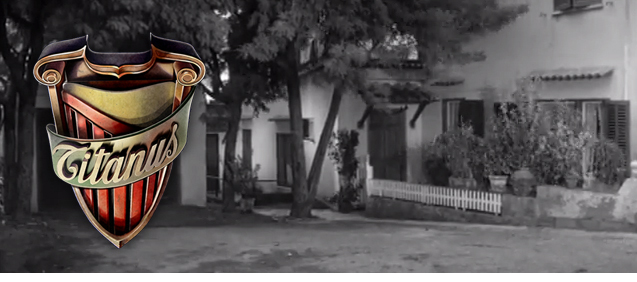
7) It was filmed at the legendary Titanus Studios The film is supposed to be set in Los Angeles, but the landscape is unmistakably the outskirts of Rome. That’s because it was shot entirely on location and at the Titanus Studios. The 100-year-old family run studio established by Gustavo Lombardo is as much a part of world cinema history as the famed Cinecittà, and has been home to peplum and classics like Visconti’s The Leopard. Today it serves as a television production facility and was recently honoured at the Locarno Film Festival. There's even a museum dedicated the studio in Torino (check it out here).


The Last Man on Earth (1964)  

8) Vincent Price visits the Palazzo della Civiltà Italiana in the EUR district of Rome An icon of Fascist architecture, the Square Colosseum, as its known, was constructed in 1935 by Mussolini for his planned 1942 world exhibition, and was intended as a large scale image of how urban Italy might have looked had his fascist regime not fallen. The iconic building can also be seen in films like Federico Fellini’s Boccaccio 70 episode, Peter Greenaway’s Belly of an Architect, and the 2005 sci-fi Equilibrium. From 2015, it will serve as the new HQ for the fashion label Fendi.


The Last Man on Earth (1964)  

9) The Paul Sawtell soundtrack is pretty cool, too! The film is highly praised for its moody soundtrack, which is quite collectable now, and is by Paul Sawtell, who did heaps of 1950s sci-fi movies, including the two Fly movies starring Vincent Price, as well as the theme tune to TV’s Voyage to the Bottom of the Sea, which Vinnie once guest starred. Order it out (here).


Last Man on Earth (1964)  

10) It’s in the public domain… There are lots of bad prints streaming on YouTube and cropping up in many a DVD collection, but I've found the best looking one so far. There's even a colourised version available (but I prefer the original black and white). So? What are you waiting for?


Last Man on Earth (1964)

Friday, 23 May 2014

The Pit and the Pendulum (1961) | Roger Corman’s ghoulish Gothic horror starring Vincent Price swings again onto Blu-ray


‘…the agony of my soul found vent in one loud, long, and final scream of despair’

This has been a great week for Vincent Price fans. Hot on the heels of the Arrow Video Blu-ray release of Theatre of Blood and ahead of The Complete Dr Phibes release on 9 June comes the Blu-ray release of The Pit and the Pendulum, director Roger Corman's 1961 follow-up to The Fall of the House of Usher.


The Greatest Terror Tale Ever Told!
16th-century Spanish nobleman Nicholas Medina (Vincent Price) is a haunted man: he fears his late wife Elizabeth (Barbara Steele) was prematurely interred and now stalks his gloomy seaside castle as a vengeful spirit. But he’s mistaken. Elizabeth is very much alive and is using a childhood trauma – Nicholas witnessed his mother being entombed alive by his inquisitor father as a child – to drive him insane. But her sick plan works only too well – Nicholas goes over the edge and becomes his own raving mad father, which puts the lives of Elizabeth’s brother Francis (John Kerr) and the rest Medina household in mortal peril…

  
Bring me my pendulum, kiddies!
Roger Corman’s second stab at Edgar Allan Poe, 1961’s Pit and the Pendulum, is a wilder, darker, more violent ride than the previous year’s The Fall of the House of Usher. Aiming to repeat that film’s success, Corman used the same team and stylistic design, even the same story. But he ended up crafting a Gothic masterpiece that’s definitely its own beast and another commercial success in his Poe/Price cycle of films.

Again Richard Matheson was called on to flesh out Poe’s original 1842 tale, which essentially was a monologue about the torments suffered by a prisoner at the hands of the Spanish Inquisition. While not pure Poe (you have to watch the great extra on this release for that), the film certainly has a Poe-esque atmosphere about it: all dread and madness draped in mauve cobwebs and rococo furnishings.

Floyd Crosby captures this with some wildly fluid camerawork and rich colour cinematography, while Daniel Haller’s art direction comes to satanic fore in the scenes involving the titular rat-infested pit and blood stained pendulum (which was 18ft-long and weighed over a ton). Les Baxter’s minimal electronic score, meanwhile, lends the film a schizophrenic air – beginning with the film’s lurid liquid sky opening titles, which makes you think you are entering a terrifying acid trip.


While Crosby’s camera has full reign of Haller’s superb castle interiors, Vincent Price really lets loose with a performance that’s become as iconic as the film’s nightmarish set-pieces. Watching him go from morbidly depressed to murderously deranged while spewing Matheson’s fruity dialogue is a hoot. It’s also what made audiences want to come back year after year. If 1960's House of Usher officially launched Price's Master of Menace persona, Pit and the Pendulum most certainly crowned him the new king of Horror. This was what seeing ‘a Vincent Price’ movie was all about.


Price, whose first appearance in the film is ‘like a ghost in an amusement park funhouse’ according to Tim Lucas in his audio commentary, certainly outshines the likes of the stiff John Kerr (who later ditched acting to become a doctor), Luana Anders (who looks lovely, but that’s all) and Antony Carbone (who looks too much like Kerr to bother with), while Barbara Steele shows her mettle as the new horror queen with her sleek feline-like performance as Price’s scheming ‘dead’ wife. While some critics felt Price overdid it, director Corman thought his star was on the mark: ‘He was able to convey the intensity and the madness of the character, bringing it to its fullest extent without going over the top’.


[SPOILER'S AHEAD] The sequences which follow Price being lured down into the crypt to the grisly, heart-stopping finale (Steele gets locked up in an iron maiden, Kerr is almost cut in half by the razor-sharp pendulum, and Price tumbles into the pit) are the film’s visual highlights. And the final shots of Price glaring up out of the pit with his dead eyes open and Steele’s eyes peering helplessly from within the iron maiden have stayed with me for years. They also had a huge impact on other fans, including director John Landis, who said: 'It scared the shit out of me! The ending is amazing… I’ve deliberately never seen that movie again. Not so much because it scared me, but because I know it couldn’t possibly be that good, you know?'


On its original release, the film, which was made in just 15 days on a budget of US$300,000, earned close to US$2million and became a hit with both critics and audiences alike, with the plaudits ranging from ‘a physically stylish, imaginatively photographed horror film’ (Variety) to ‘a thoroughly creepy sequence of horrors’ (New Yorker) and - my favourite - 'Engagingly cornball insanity-in-the-castle hokum, with Vincent Price in fine eyeball-rolling, scenery-chomping form.' (Joe Dante, Castle of Frankenstein). Even American International Pictures chief, Sam Arkoff praised it, saying: ‘I thought it was really good – the best of the Poes’.


THE ARROW BLU-RAY RELEASE
Arrow Video
's high definition Blu-ray (1080p) presentation is transferred from original film elements by MGM, featuring original uncompressed PCM mono audio, optional isolated music and effects track and optional English SDH subtitles. According to the experts over at DVD Beaver, its a robust transfer with a much higher bitrate than the US Shout! Factory edition, smoother and superior, supporting an excellent 1080P image despite some frame-specific damage, while the replication of the original production audio has noticeable depth.


THE EXTRAS
• In Roger Corman’s audio commentary (which is also on the Shout! Factory Blu-ray release), the maverick producer/director looks back at the making of the film, revealing the visual tricks he employed in his ‘Freudian-inspired’ horror. Who knew that doors represent the vagina and the dark corridors are an initiation into sexuality? You’ll certainly read the film differently after listening to this.
• The other audio commentary, by Video Watchdog’s Tim Lucas (*), is packed with juicy nuggets (I always wondered why those castle matt shots ended up in The Monkees). And when it comes to the film’s technical minutia, Lucas really knows his stuff. Film buffs will lap this up.
Behind the Swinging Blade – This new documentary on the making of The Pit and the Pendulum features interviews with Roger Corman, Barbara Steele and Victoria Price, while director Brian Yunza, who is a big fan of the film, also pops up. (43-min)
• Added TV Sequence – Shot in 1968 for the longer TV cut, this scene features star Luana Anders and is set in an asylum. Its a real curio, but for the life of me, I couldn't work out where it would have been placed in the storyline. If you know, please enlighten me. (5-min)
An Evening of Edgar Allan Poe – This terrific 1970 TV special, shot on video, gave Vincent Price the chance to do Poe unplugged, reciting The Tell-Tale Heart, The Sphinx, The Cask of Amontillado and The Pit and the Pendulum as he always wanted to do. The transfer quality here is on par with the 2003 MGM DVD release. But did you know, the period costumes were all designed by Price's second wife, Mary? (53-min. With optional English SDH)
• Original Trailer
• Limited Edition SteelBook packaging featuring original artwork (SteelBook only)
• Reversible sleeve featuring artwork by Gilles Vranckx (Amaray release only)
• Collector’s booklet featuring new writing by author Jonathan Rigby, illustrated with original archive stills


(*) Tim Lucas is also co-author of The Man With The Kaleidoscope Eyes: an original screenplay about Roger Corman and the filming of The Trip, which Joe Dante is in line to direct.
Additional sources:
The Films of Roger Corman: Shooting My Way Out of Trouble, Alan Frank, 1998

Friday, 23 August 2013

Blu-ray review | The Fall of the House of Usher (1960) | Roger Corman’s American gothic classic rises again in lush HD

FALL_OF_THE_USHER_STEELBOOK 
THE STORY
In this striking 1960 elaboration on Edgar Allan Poe’s 1839 short story, Philip Winthrop (Mark Damon) arrives at the crumbling New England mansion of the Usher family to seek out his fiancée Madeleine (Myrna Fahey) and is promptly warned by her brother Roderick (Vincent Price) against marriage because the family is cursed with 'a history of savage degradations' which sends them mad. When Madeleine suddenly dies, Philip goes into mourning and his intended bride is quickly interred in the family crypt. But he is unaware that Roderick has buried his catatonic sister alive…

Vincent Price in House of Usher

THE LOWDOWN
At the end of the 1950s, rubber suit monsters were the mainstay of American horror films, while over the pond Hammer was packing cinemas with their full-blooded restaging of the Frankenstein and Dracula characters. Indie maverick Roger Corman quickly followed suit, combining America’s answer to the gothic, Edgar Allen Poe, CinemaScope and his trump card, Vincent Price.

The result was this minor masterpiece, which stays faithful to Poe as it tells the story of Roderick Usher (played by Price as a white haired, ashen faced aesthete, decked in a blood red robe) who longs for an end to his family’s curse which has impregnated the very walls of his crumbling mansion and has distorted his psyche and that of his sister - which is chillingly echoed in the line: 'The slightest touch and we may shatter'.

Price gives an intentionally concentrated, eerie and sad turn here and lends the film a mellifluous quality that brings to life Corman's Freudian take on Poes themes of inner corruption. It was a performance that would solidify Price’s new status as the crown prince of horror - that had kicked in while he was working on William Castle’s House on Haunted Hill and The Tingler - and which makes this film so chillingly memorable over half a century on.

Richard Matheson's intelligent script is enhanced by Floyd Crosby's atmospheric widescreen cinematography, whose psychedelic scenes tapped into the counter-culture movement of the day, while Daniel Haller makes the hired-in Universal sets look even more sumptuous. Coupled with Corman’s whip-smart direction and quick turnaround (the film was shot in 15 days), a rousing Les Baxter score and Price’s star quality, the style established here would be carried over in seven more Poe films, ending with The Tomb of Ligeia in 1964. But they would never have been made had Usher not set the box-office alight, which it did - earning in excess of $1 million back from its $250,000 budget ($50,000 of which was Price’s fee) when it premiered in the US on 18 June 1960.

Fall_of_the_House_of_Usher_cover1

THE ARROW VIDEO RELEASE
In a world first, Arrow presents a Region B HD Blu-ray (1080p) presentation of the feature, transferred and restored using the original film elements by MGM and original uncompressed 2.0 Mono PCM Audio. Optional SDH subtitles.

THE EXTRAS
• The Roger Corman audio commentary is the same as on the previous MGM DVD release, but the maestro is still a joy to listen to. (79:19)
Legend to Legend Director Joe Dante gives his thoughts on the film and on working with Corman. (26:47)
• Gothic horror expert Jonathan Rigby provides an informative insight into the history of the film, and on Corman and Price. (32:58)
Fragments of the House of Usher This video essay by critic and filmmaker David Cairns is a super little film studies analysis. I never knew the original story had gay overtones or that the film was ‘the perfect marriage of the oneric to the economic?’ (10:47)
• This French interview with Vincent Price has popped up on other DVD releases, but the transfer here is the best yet. It was shot at Price’s Malibu cottage in July 1986, the same year that he was doing The Great Mouse Detective for Disney, which was one of his last best performances. Ever the consummate raconteur, he provides the interviewer with some wonderful quotes, like the following, about why his horror films have stood the test of time. (11:26)

The secret of those films and why they have lasted so well is that you scream at the terror of them, but then you find yourself ridiculous for having screamed and you laugh at yourself, maybe that’s the clue to life.

• Unrestored US trailer with the most hilarious copy writing ever: 'The screen's foremost delineator of the Draculean!' (2:30)
• Reversible sleeve on the standard release, featuring artwork by Graham
Humphreys.
• Booklet featuring Tim Lucas essay, Vincent Price autobiography extract, archive stills and posters.

BLU-RAY GRABS
The Fall of the House of UsherThe Fall of the House of Usher800__fall_house_usher_blu-ray_11_

DID YOU KNOW?
The opening shot of Mark Damon riding towards the Usher mansion through a bleak, blackened wilderness of charred trees, ash and fog was achieved by Corman filming the sequence in the aftermath of a forest fire that had torched part of the Hollywood Hills just prior to filming.

Tuesday, 25 June 2013

RIP Richard Matheson (1926-2013) - author, screenwriter, legend

The news that American author and screenwriter Richard Matheson has passed away this week (23 June) at the age of 87 has filled me with sadness. His massive body of work was hugely influential in the world of science fiction just as the late Ray Bradbury (who left us in June of last year) was in the field of fantasy fiction. 

On screen, I will forever remember Matheson as the writer of many of Roger Corman's Poe films starring Vincent Price.
 
1960 The Fall of the House of Usher (screenplay) 

1961 Master of the World (screenplay) 

1961 Pit and the Pendulum (screenplay) 

1962 Tales of Terror (screenplay) 

1963 The Raven (writer) 

1963 The Comedy of Terrors (novel - uncredited screenplay)


But my favourite work of his remains 1954's I Am Legend, which has been adapted for the screen three times – first with Vincent in 1964's underrated The Last Man on Earth (as Logan Swanson), then with Chuck Heston in 1971 classic The Omega Man, and finally in that Will Smith one. 

RIP Richard. Thanks for taking me beyond the stars and beyond the limits of my imagination.

If you'd like to share your favourite Richard Matheson titles on Twitter, then use the hashtag #RIPMatheson, otherwise please leave a comment below.